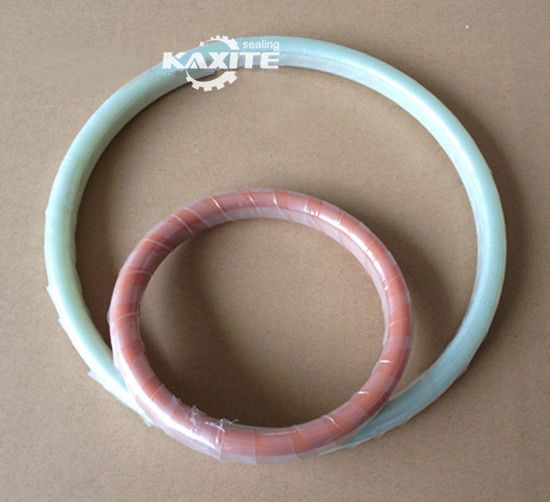
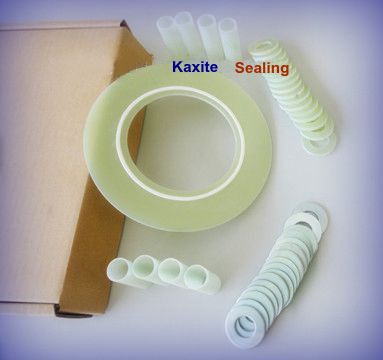
Gaskets are fundamental sealing components found in virtually every industry, from household appliances to spacecraft. They are precision-engineered materials placed between two or more mating surfaces to prevent leakage of fluids or gases under compression. A gasket fills the microscopic irregularities present on even the most finely machined flanges, creating a tight, leak-proof seal. Failure of a gasket can lead to catastrophic consequences, including system shutdowns, environmental contamination, safety hazards, and significant financial loss. Therefore, selecting the correct gasket type for your specific application—considering factors like temperature, pressure, media, and flange conditions—is not just a recommendation; it's a critical engineering requirement.
Choosing a gasket requires a detailed analysis of the operating conditions. Below are the primary parameters that must be evaluated. We recommend using this as a checklist for your next project.
We manufacture and supply a comprehensive range of gasket materials to meet the most demanding specifications. The following table details the properties of our core material families.
| Material Family | Standard Grades | Temp. Range (°F / °C) | Max Pressure (PSI) | Key Media Resistance | Primary Applications |
|---|---|---|---|---|---|
| Compressed Non-Asbestos (CNA) | NAF 1000, NAF 2000 HT, NAF 3000 CR | -100°F to +1200°F / -73°C to +650°C | Up to 3000 PSI | Steam, hot oils, hydrocarbons, mild chemicals | General industrial, petrochemical, power generation flanges |
| Expanded PTFE (ePTFE) | Standard White, Chemically Resistant, FDA Compliant | -450°F to +500°F / -268°C to +260°C | Up to 2000 PSI | Virtually all chemicals, acids, solvents (except molten alkali metals) | Chemical processing, pharmaceutical, food & beverage, ultra-clean systems |
| Flexible Graphite | Pure, Foil Laminated, Insertion Gaskets | -400°F to +3000°F* / -240°C to +1650°C* (*in inert atm.) | Up to 2200 PSI | Hot gases, steam, hydrocarbons, fire-safe applications | High-temperature heat exchangers, turbine casings, fire-safe API 607/6FA valves |
| Rubber Elastomers (FKM, EPDM, NBR) | FKM (Viton®), EPDM, Nitrile (NBR), Silicone | -40°F to +400°F / -40°C to +205°C (varies by type) | Up to 1500 PSI | Oils (NBR), ozone/weathering (EPDM), fuels/aromatics (FKM) | Automotive, hydraulics, pumps, fuel systems, water treatment |
| Metal Jacketed (Soft Fill) | 304SS/Graphite, 316SS/PTFE, Carbon Steel/Asbestos-Free | -328°F to +1500°F / -200°C to +815°C | Up to 2500 PSI | High-pressure steam, corrosive media, severe service | Pressure vessel manways, heat exchangers, high-pressure pipe flanges |
What is the main difference between a gasket and an O-ring?
A gasket is typically a static seal designed for flat or irregular surfaces like pipe flanges, while an O-ring is a dynamic or static seal that fits into a machined groove, creating a seal through radial compression. Gaskets are generally used for larger diameters and higher bolt loads, whereas O-rings are ideal for compact, groove-based designs in hydraulic and pneumatic systems.
How do I determine the correct gasket thickness for my application?
Gasket thickness is selected based on flange type, surface condition, and required sealing performance. For standard raised face flanges, thinner gaskets (1/16") provide better performance under high bolt load. For uneven or damaged flanges, a thicker, more compressible gasket (1/8" or 3/16") may be necessary to fill gaps. Always consult engineering standards (like ASME B16.20) and consider the gasket material's compressibility and recovery characteristics.
Can I reuse a gasket after disassembling a connection?
It is strongly discouraged and often against engineering codes to reuse a gasket. Once compressed, a gasket undergoes permanent deformation (creep relaxation) and loses its original sealing properties. Reinstallation may not achieve the required bolt load distribution, leading to a high probability of leakage. Always install a new, undamaged gasket of the correct specification during reassembly.
What causes a gasket to fail prematurely?
Premature gasket failure can result from several factors: incorrect material selection (chemical or thermal incompatibility), improper installation (uneven bolt torque, insufficient load), flawed flange conditions (warpage, poor surface finish, incorrect alignment), or exceeding the gasket's design parameters (temperature, pressure). A failure analysis should consider all these operational and mechanical factors.
What does "fire-safe" certification mean for a gasket?
A "fire-safe" gasket is designed and tested to maintain a seal during and after exposure to extreme fire conditions for a specified period. Standards like API 607 and API 6FA define test procedures involving direct flame impingement followed by a quench spray and a final leak test. Materials like certain flexible graphite and metal-jacketed designs are commonly certified. Using certified fire-safe gaskets is crucial for safety-critical applications in oil, gas, and chemical plants.
How important is bolt torque and tightening sequence for gasket performance?
It is absolutely critical. Achieving a uniform, proper bolt load across the entire flange face is essential for a reliable seal. An incorrect sequence (like tightening bolts in a circle) can warp the flange, creating gaps. Always use a cross-pattern tightening sequence (star pattern) in multiple incremental steps, following the equipment manufacturer's or gasket supplier's specified torque values. Using calibrated torque wrenches is recommended for critical joints.
Beyond standard sheet and spiral wound gaskets, specialized configurations solve unique engineering challenges. Kammprofile Gaskets feature a solid metal core with concentric grooves and a soft sealing layer (like graphite), offering excellent resilience and high-pressure capability. Ring Type Joint (RTJ) Gaskets are precision-machined metal rings that seal in a groove, used for ultra-high pressure in oil and gas wellheads and valves. Double-Jacketed Gaskets provide an extra layer of protection in highly corrosive services. Each type requires specific flange designs and installation protocols for optimal performance. Our engineering team can assist in specifying the correct advanced gasket for your severe-service application, ensuring reliability under the most extreme conditions of temperature, pressure, and corrosive media.