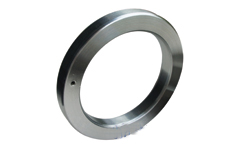
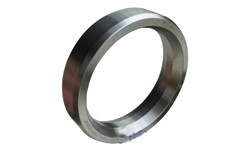
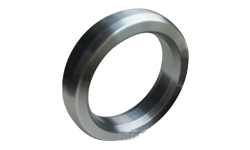
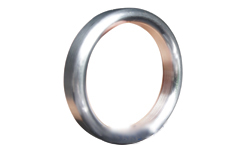
Ring Joint Gaskets (RJ Gaskets) are precision-engineered sealing components designed for high-pressure, high-temperature, and critical service applications. They form a metal-to-metal seal by being compressed into a specially machined groove in flanges, creating a highly reliable, leak-tight barrier. Primarily used in the oil and gas, petrochemical, and power generation industries, these gaskets are essential for ensuring safety, environmental protection, and operational integrity in systems containing volatile or hazardous fluids.
Our RJ gaskets are manufactured to the highest international standards, offering unmatched performance and durability.
Selecting the correct Ring Joint Gasket requires careful consideration of size, style, and material. Our product range covers all standard and many specialized requirements.
Ring Joint Gaskets are categorized by their cross-sectional shape, which must match the corresponding flange groove.
| Type | Description | Typical Applications |
|---|---|---|
| R Style (Oval) | Features an oval cross-section. The original and widely used style for a broad range of pressures. | ASME B16.5 Flanges, general refinery piping, lower to medium high-pressure systems. |
| RX Style | A modified oval style with a pressure-energizing design. It provides improved sealing at higher pressures and can be used in some R-style grooves. | Higher pressure oil and gas production equipment, Christmas trees, wellheads. |
| BX Style | Features an octagonal cross-section. Designed for the most extreme pressures and critical services. Requires a matching BX groove. | API 6A systems, subsea equipment, ultra-high pressure vessel closures, sour service. |
Our gaskets are available for standard flange sizes and pressure classes. The table below outlines common sizes.
| Nominal Pipe Size (NPS) | Pressure Class | Corresponding Ring Number (Example) | Applicable Standards |
|---|---|---|---|
| 1/2" to 24" | 150, 300, 400, 600, 900, 1500, 2500 | R20, R21, R23, etc. | ASME B16.5, ASME B16.47 |
| 1-13/16" to 21-1/4" (Bore) | 5,000 psi to 20,000 psi | BX-150, BX-151, etc. | API 6A, API 17D |
The choice of material is critical for corrosion resistance, temperature capability, and mechanical strength. We offer a comprehensive selection.
| Material Grade | Common Designation | Key Properties | Recommended Service |
|---|---|---|---|
| Soft Iron | ASTM A105 / LF2 (Coated) | Excellent deformability, seals easily. Typically coated with anti-galling coating. | General service, non-corrosive hydrocarbons, water, steam. |
| Low Carbon Steel | ASTM A350 LF1/LF2 | Good strength and ductility, cost-effective. | General oil and gas production, lower temperature services. |
| Stainless Steel 304/304L | ASTM A182 F304/F304L | Good general corrosion resistance, oxidation resistance up to ~1500°F. | Corrosive process fluids, chemical applications, high-temperature steam. |
| Stainless Steel 316/316L | ASTM A182 F316/F316L | Enhanced corrosion resistance, particularly to chlorides and acids. | Marine environments, chemical processing, pulp and paper. |
| Alloy 20 | UNS N08020 | Excellent resistance to sulfuric acid and other aggressive chemicals. | Sulfuric acid service, chemical reactors. |
| Duplex/Super Duplex | UNS S31803 / S32750 | High strength, excellent resistance to stress corrosion cracking and pitting. | Offshore, subsea, sour gas (H2S) service, seawater systems. |
| Inconel 600/625 | UNS N06600 / N06625 | Outstanding high-temperature strength and oxidation/corrosion resistance. | High-temperature reactors, furnace components, severe corrosive service. |
| Monel 400 | UNS N04400 | Excellent resistance to seawater, hydrofluoric acid, and alkalis. | Marine and offshore applications, HF alkylation units. |
Correct installation is paramount to achieving a safe, leak-free seal. Follow these key steps:
Warning: Never reuse a gasket that shows signs of flattening, cracks, heavy compression, or galling. Always use new gaskets for pressure-containing integrity.
A: The primary difference lies in their cross-sectional shape and application pressure range. R-style (oval) is for standard high-pressure applications. RX-style is a pressure-energized oval that provides a better seal at higher pressures and can sometimes interchange with R grooves. BX-style (octagonal) is engineered for the most extreme pressures (often 5,000 psi and above) and critical services like wellheads; it requires a perfectly matched BX groove and cannot be interchanged with R or RX.
A: In some cases, yes, but it is not universally recommended or approved. The RX gasket is designed to be interchangeable with R grooves of the same number according to API 6A specifications, primarily for wellhead equipment. However, for standard ASME B16.5 piping flanges, you should always use the gasket style specified for the flange. Consult the flange manufacturer's guidelines or a sealing specialist before attempting substitution.
A: The Ring Number is typically stamped on the outer surface of the gasket (e.g., R24, BX-154). For ordering, you need the flange's Nominal Pipe Size (NPS), Pressure Class (e.g., 900#), and the flange standard (e.g., ASME B16.5). These parameters correspond to a specific Ring Number as defined in ASME B16.20 or API 6A. Always refer to engineering documents or measure the groove dimensions if the specification is unknown.
A: Lubrication serves two vital purposes. First, it prevents galling (cold welding) between the soft metal gasket and the harder flange material during the high-stress compression of bolt tightening. Second, it ensures smoother, more even compression of the gasket into the groove, facilitating a better seal and making future disassembly possible without damaging the flange grooves.
A: Over-torquing can have severe consequences: it can completely crush and deform the ring gasket, destroying its sealing ability and potentially causing it to fracture. It can also over-stress the bolts, leading to thread damage, bolt stretching, or failure. Most critically, it can cause permanent distortion or cracking of the flanges themselves, which is a costly repair. Always follow the specified torque procedure.
A: Sour service, defined by the presence of wet hydrogen sulfide (H2S), requires materials resistant to Sulfide Stress Cracking (SSC) and Hydrogen Induced Cracking (HIC). Standards like NACE MR0175/ISO 15156 provide guidelines. For ring gaskets in sour service, common approved materials include Soft Iron (with proper coating), certain low-alloy steels, Duplex (UNS S31803), and Super Duplex (UNS S32750) stainless steels. The final selection must consider partial pressure of H2S, pH, temperature, and total stress. Always consult with a materials engineer.
A: Yes, Ring Joint Gaskets are excellent for high-vacuum applications. Their metal-to-metal seal is highly effective at preventing in-leakage of air. The gasket must be properly installed in a clean, undamaged groove, and the system design must ensure the flanges have sufficient rigidity to prevent distortion under external atmospheric pressure.