PTFE & PEEK Seals are high-performance sealing solutions engineered for demanding industrial applications where standard elastomers fall short. These seals are crafted from advanced fluoropolymer and thermoplastic materials, offering a unique combination of chemical resistance, thermal stability, low friction, and mechanical strength. They are critical components in industries such as aerospace, semiconductor manufacturing, chemical processing, pharmaceuticals, food and beverage, and oil and gas, ensuring reliability, safety, and longevity in extreme operating conditions. This guide provides a comprehensive overview of their properties, specifications, and applications.
### Material Properties and Advantages
**PTFE (Polytetrafluoroethylene) Seals:**
PTFE, often known by the brand name Teflon®, is renowned for its exceptional chemical inertness and wide operating temperature range. It is a soft, flexible fluoropolymer with a very low coefficient of friction.
* **Chemical Resistance:** Virtually inert to all industrial chemicals and solvents.
* **Temperature Range:** Can perform continuously from -200°C to +260°C (-328°F to +500°F).
* **Coefficient of Friction:** Extremely low, providing excellent anti-stick and non-galling properties.
* **Electrical Properties:** Excellent insulator with high dielectric strength.
* **Limitations:** Can exhibit cold flow or creep under sustained load and has lower mechanical strength compared to engineered plastics.
**PEEK (Polyetheretherketone) Seals:**
PEEK is a high-strength, semi-crystalline thermoplastic known for its outstanding mechanical and thermal properties, retaining performance at elevated temperatures.
* **Mechanical Strength:** High tensile strength, stiffness, and fatigue resistance. Excellent resistance to creep.
* **Temperature Range:** Continuous use up to 250°C (482°F). Short-term peaks up to 310°C (590°F) are possible.
* **Chemical Resistance:** Resists a wide range of chemicals, including hydrocarbons, acids, and bases, though not as universal as PTFE.
* **Wear Resistance:** Superior abrasion resistance compared to PTFE, especially when reinforced.
* **Radiation Resistance:** Excellent resistance to gamma and X-ray radiation.
### Key Product Specifications and Parameters
Our PTFE & PEEK seals are manufactured to precise specifications to ensure optimal performance. The following lists and tables detail critical parameters.
**Common Seal Types Available:**
* O-Rings (AS568, ISO 3601, and custom sizes)
* V-Rings and Chevron Seals
* Back-up Rings and Wear Rings
* Gaskets (Sheet, Envelope, and Custom Machined)
* U-Cups, Piston Seals, and Rod Seals
* Bellows and Diaphragms
* Wiper Seals and Scrapers
**Standard Manufacturing Processes:**
* **PTFE:** Compression Molding, Isostatic Molding, CNC Machining from Skived Sheet or Rod Stock, Automatic Molding for O-Rings.
* **PEEK:** Injection Molding, CNC Machining from extruded rod, plate, or tube stock.
**Typical Physical & Mechanical Properties Table:**
| Property | Test Standard | PTFE (Virgin) | PTFE (Glass Filled) | PEEK (Virgin) | PEEK (30% Carbon Filled) |
| :--- | :--- | :--- | :--- | :--- | :--- |
| **Density (g/cm³)** | ISO 1183 | 2.14 - 2.20 | 2.20 - 2.30 | 1.30 | 1.44 |
| **Tensile Strength (MPa)** | ISO 527 | 20 - 35 | 15 - 25 | 90 - 100 | 160 - 170 |
| **Elongation at Break (%)** | ISO 527 | 300 - 500 | 200 - 300 | 30 - 50 | 2 - 4 |
| **Compressive Strength (MPa)** | ISO 604 | 12 | 15 | 110 | 140 |
| **Flexural Modulus (GPa)** | ISO 178 | 0.5 | 1.5 - 2.5 | 3.7 | 12.5 |
| **Coeff. of Friction (Dynamic)** | ASTM D1894 | 0.05 - 0.10 | 0.10 - 0.15 | 0.35 - 0.45 | 0.25 - 0.35 |
| **Continuous Service Temp.** | — | -200°C to +260°C | -200°C to +260°C | -60°C to +250°C | -60°C to +250°C |
**Typical Chemical Compatibility Guide (Resistance Rating):**
* **Excellent (Minimal to No Effect):** PTFE & PEEK: Most acids (Sulfuric, Hydrochloric, Nitric), bases, solvents (Acetone, Alcohols), oils, fuels. PTFE is superior for harsh oxidizers and halogens.
* **Good (Minor Swelling/Effect):** PEEK: Hot water, steam, some chlorinated solvents at high temps.
* **Poor (Not Recommended):** PEEK: Concentrated sulfuric acid (>95%), fuming nitric acid. PTFE has no significant poor ratings.
### Industry-Specific Applications
* **Semiconductor & Wafer Fab:** Seals for CVD, plasma etch, and wet process equipment. Used in gas lines, wafer carriers, and pumps handling ultra-pure and aggressive chemicals. Purity and outgassing are critical.
* **Aerospace & Aviation:** Hydraulic system seals, fuel system components, engine wear rings, and insulation seals. Must withstand Skydrol® fluid, wide temperature swings, and high pressure.
* **Chemical Processing:** Gaskets, valve seals, and pump components for reactors, pipelines, and agitators handling corrosive media.
* **Oil & Gas:** Downhole tool seals, wellhead components, and seals for measurement while drilling (MWD) tools. Resist H₂S, high pressure (HP), and high temperature (HT).
* **Food, Beverage & Pharmaceutical:** Sanitary fittings, pump seals, and valve seats requiring FDA/USP Class VI compliance, cleanability, and steam sterilization (SIP/CIP).
* **Automotive & Racing:** Transmission seals, turbocharger components, and high-temperature fluid seals in engines and braking systems.
### FAQs: PTFE & PEEK Seals
**Q: When should I choose a PTFE seal over a PEEK seal, and vice versa?**
A: Choose PTFE seals when your primary needs are unparalleled chemical resistance, ultra-low friction, or a very wide temperature range including cryogenics. PTFE is ideal for static seals, anti-stick surfaces, and chemically aggressive environments. Choose PEEK seals when you require high mechanical strength, excellent creep resistance, superior wear performance, and need to maintain structural integrity under continuous load at high temperatures. PEEK is often chosen for dynamic seals, heavy-duty wear rings, and in applications combining high temperature with mechanical stress.
**Q: Can PTFE and PEEK seals be used in dynamic applications?**
A: Yes, but with considerations. Virgin PTFE has a high wear rate in dynamic use and is often filled with materials like bronze, glass, or carbon to improve wear resistance and reduce creep. PEEK is inherently much better for dynamic sealing due to its high strength and wear resistance, especially in carbon or graphite-filled grades. The design (clearance, surface finish, lubrication) is critical for dynamic seal longevity with both materials.
**Q: What are the limitations of PTFE seals?**
A: The main limitations of PTFE are cold flow (creep under long-term load), low thermal conductivity, and a relatively high coefficient of thermal expansion. It can also be difficult to achieve a perfect static seal without sufficient flange pressure due to its stiffness. These limitations are often mitigated by using filled PTFE compounds or incorporating design features like energizers (e.g., elastomer O-rings behind the PTFE seal lip).
**Q: Are there FDA-approved grades of PTFE and PEEK for food contact?**
A: Yes. Specific grades of virgin, unfilled PTFE and PEEK polymers are compliant with FDA regulations (21 CFR 177.1550 for PTFE) and are often certified to USP Class VI for pharmaceutical applications. It is crucial to specify FDA-compliant or USP Class VI grades when ordering seals for food, beverage, or medical/pharma uses. Some filler materials may not be compliant.
**Q: How do I select the right filler or compound for my PTFE or PEEK seal?**
A: Filler selection is application-driven. For PTFE, common fillers include: Glass (improves wear, compression resistance), Bronze (enhances thermal conductivity, wear), Carbon/Graphite (lowers friction, improves wear), and Molybdenum Disulfide (improves lubrication in non-lubed apps). For PEEK, common fillers are: Carbon Fiber (greatly increases strength, stiffness, wear), Graphite (improves lubrication), and PTFE (lowers friction). Consult with our engineering team for specific recommendations based on your media, temperature, pressure, and motion.
**Q: What are the key design and installation considerations for these seals?**
A: Critical factors include: Surface Finish (recommended 8-16 µin Ra for dynamic, 16-32 µin Ra for static), Hardness of mating surfaces, Clearances (must be controlled to prevent extrusion, especially for PTFE), Thermal Expansion (account for differential expansion between seal and metal housing), and Installation (avoid sharp edges, use proper tools to prevent cutting or scratching the seal). Proper gland design per standards like AS 568 or ISO 3601-1 is essential.
**Q: How do PTFE and PEEK perform in vacuum and high-purity applications?**
A: Both materials are excellent choices. High-purity, virgin grades of PTFE and PEEK have very low outgassing rates, making them suitable for high-vacuum and ultra-high-purity systems. They do not contain plasticizers or additives that could volatilize and contaminate the process. Special cleaning and packaging protocols are available for these critical applications.
**Q: Can these seals be customized in color for identification or branding?**
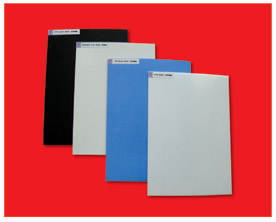
A: While virgin PTFE is naturally white and virgin PEEK is typically a tan/beige color, both materials can be produced in various colors using compatible, high-temperature stable pigments. This is common for color-coding different seal sizes, materials, or for specific OEM branding purposes. The coloring agent must be chosen to not degrade the material's key performance properties.